CHOWNOW
VERBAL
REBRAND
How research, testing, and creative systems helped unify a growing restaurant-tech brand across audiences and channels.

MY ROLE
As part of ChowNow’s rebrand, I led verbal identity, copy, and content strategy, building from the foundational direction set by our agency partner, Gretel. In partnership with our Art Director and Director of Production, I turned that strategy into testable, scalable creative across audiences and channels.
-
My Role
Led copy, messaging, and content strategy. Researched audience and channel needs, developed prototypes, tested language and content formats, and refined the system .
-
Partner: Design & Art Director
Responsibilities: Led visual research, creative development, design, visual testing, and execution across the new brand system.
-
Partner: Director of Production
Responsibilities: Aligned production strategy, timing, resources, stakeholders, and execution across departments.
-
Partner: Gretel (Agency)
Responsibilities: Established the core rebrand strategy and creative direction that guided the internal work.
THE
CHALLENGE
CLARITY HAD BECOME A BUSINESS NEED.
Research showed that ChowNow’s restaurant and diner journeys were competing for clarity. Overlapping products, navigation, value propositions, and messages made it harder to understand who each experience served and what action should come next.
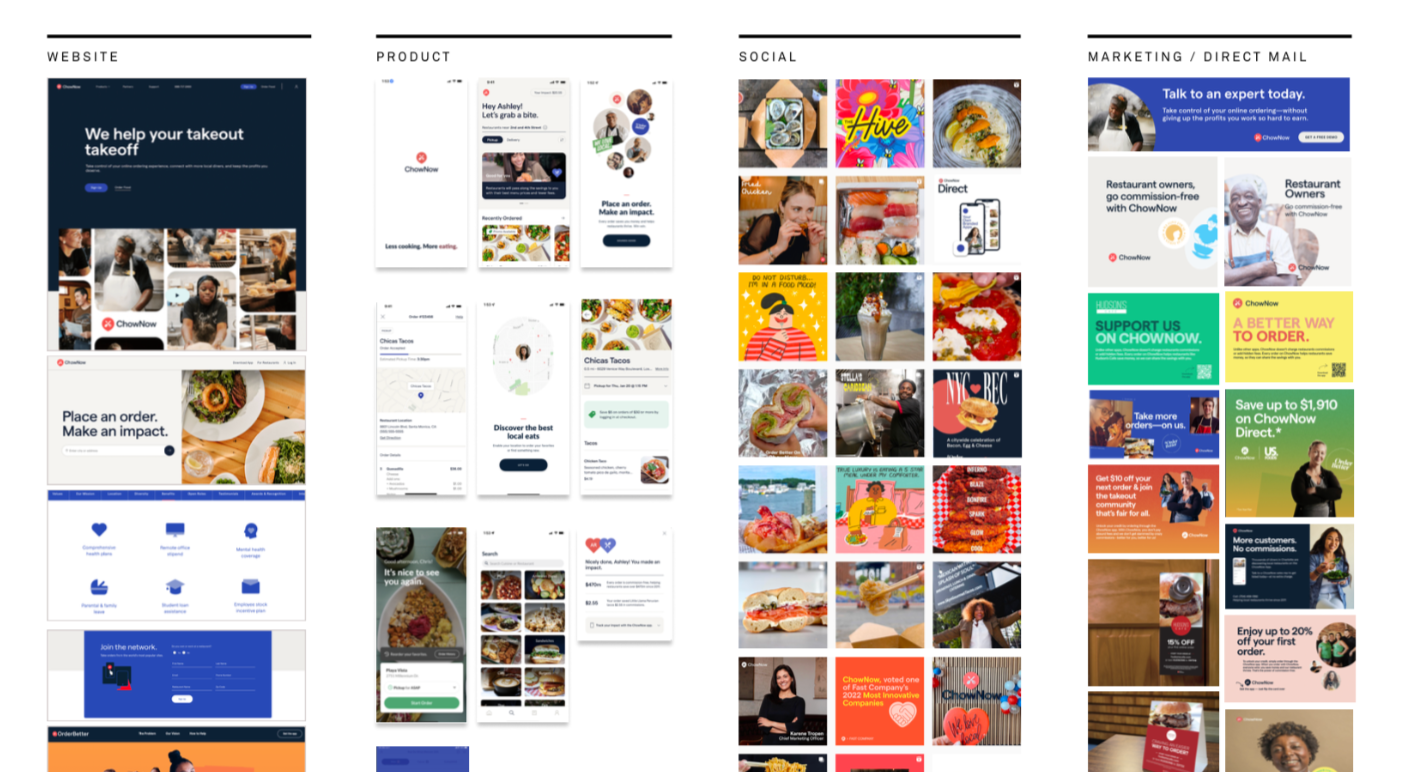
Across product, web, sales, lifecycle, social, and customer communications, the content needed to capture attention faster, clarify value, and guide action.
DATA & INSIGHT
FIND THE SIGNAL.
TEST THE IDEA.
ChowNow served more than 11,000 restaurant customers and reached roughly 4 million diners each month. Product spoke one language. Sales spoke another. Lifecycle, social, customer education, executive communications, and internal teams each had their own habits. It lacked a shared creative system.
That meant more than writing a tagline or publishing a tone guide. ChowNow needed clear positioning, usable standards, stronger writing teams, and a content operation that could carry the brand from a product screen to a national campaign.
THE DIAGNOSIS
FOUR ISSUES HOLDING THE BRAND BACK:
Legacy language no longer clearly separated ChowNow’s value to restaurants from its value to diners, making acquisition journeys harder to understand and support.
OUTDATED POSITIONING
INCONSISTENT VOICE & TONE
Tone, terminology, and message hierarchy changed across teams and channels, creating an uneven customer experience and slowing creative development and review.
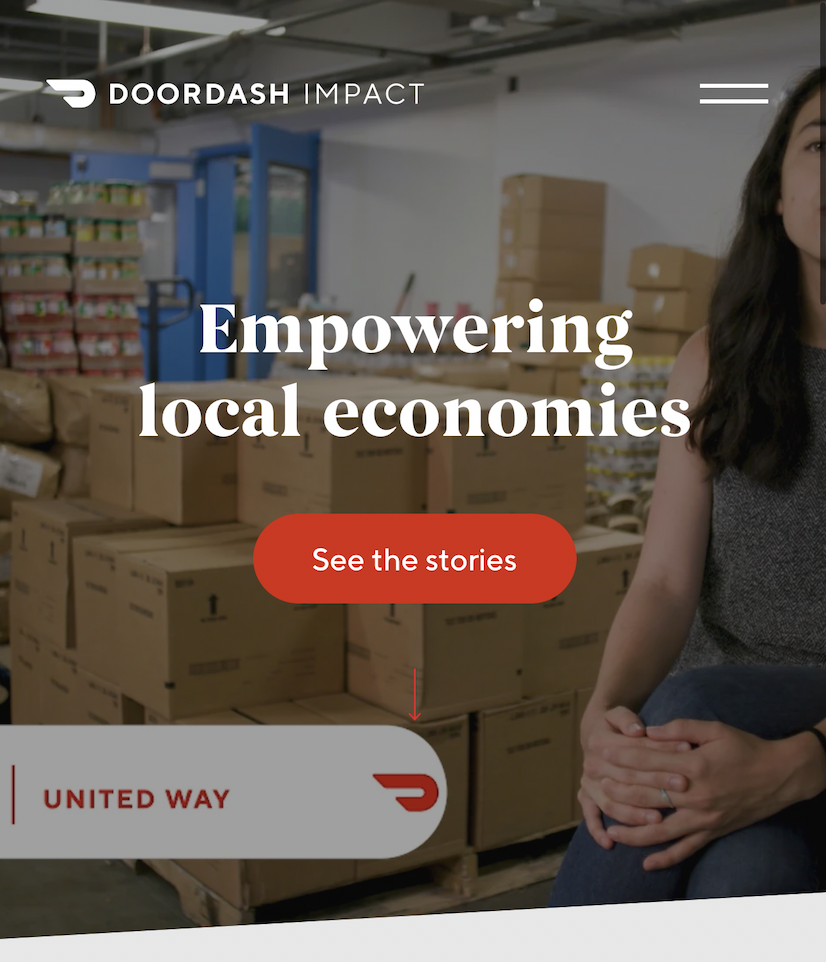
Competitors relied on similar language around convenience, growth, delivery, and supporting local restaurants, making it harder for ChowNow to own a memorable position.
SIMILAR TO COMPETITION
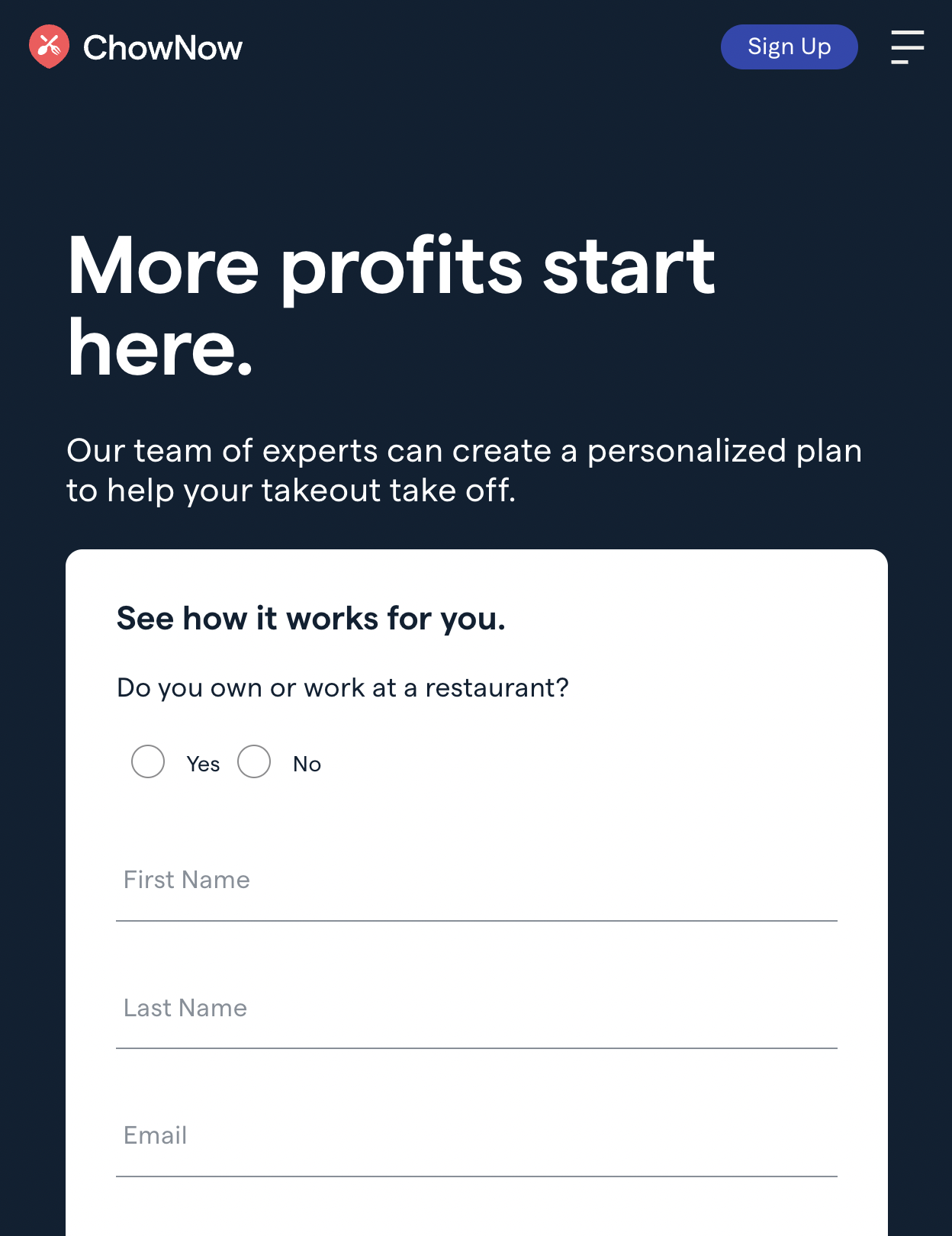
Weak hooks, overloaded messages, and inconsistent structures made content harder to scan, compare, test, and improve, limiting the team’s ability to turn performance data into repeatable learnings.
INEFFICIENT PERFORMANCE
THE STRATEGY
TURN THE RESEARCH INTO CREATIVE WE COULD TEST.
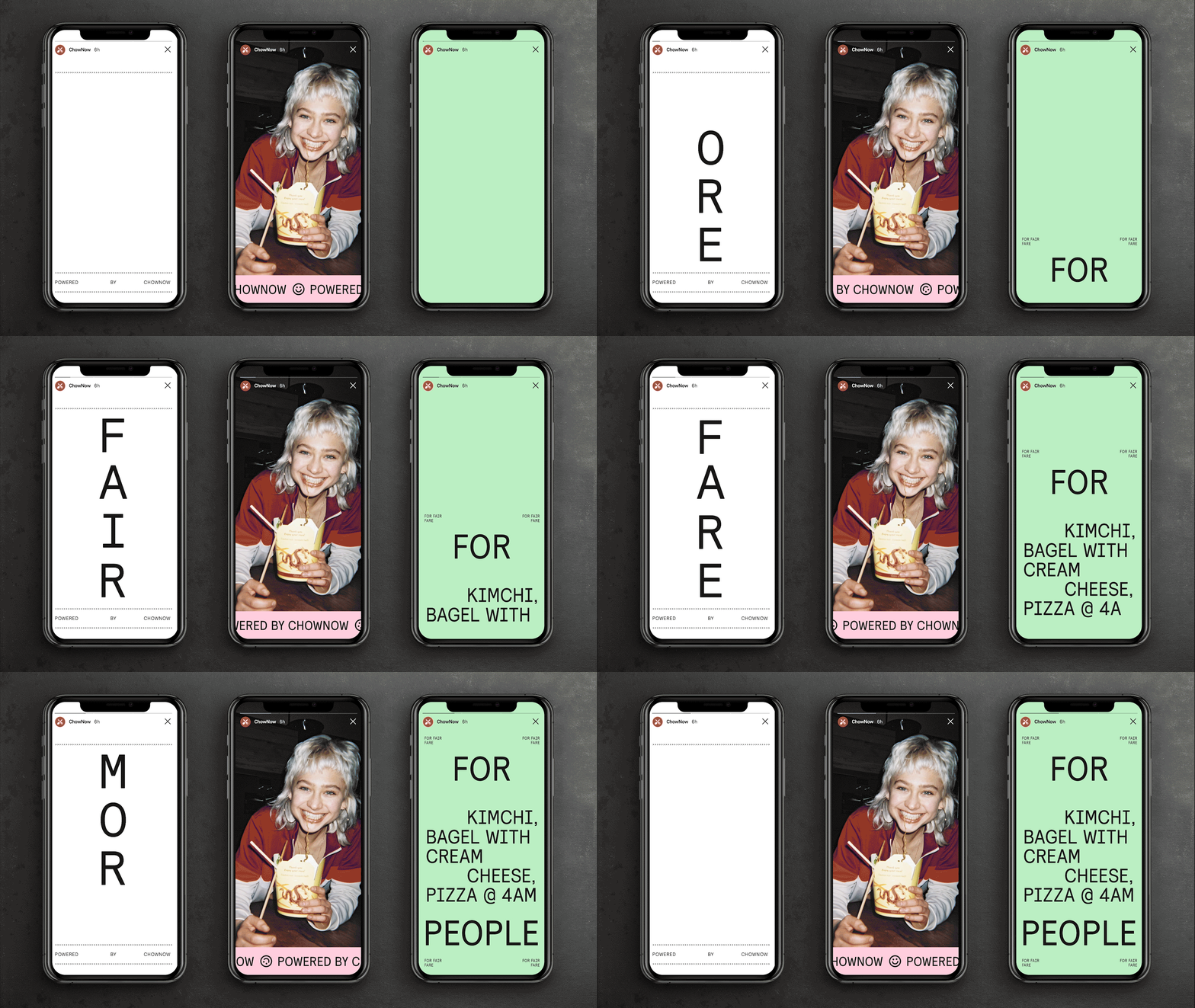
I turned research and performance signals into creative hypotheses, then led the copy and content prototyping needed to test them. In parallel with our Art Director’s visual prototypes, I briefed writers, designers, marketers, and creators to adapt the concepts across channels and formats. This let us isolate creative variables, compare performance, and quickly scale the strongest patterns.
CHARTING A PLAN
GIVE EVERY TEST A STRUCTURE.
The brief defined what we were testing, why it mattered, who owned each step, and how we would measure success. That structure helped teams produce more variations while preserving clean comparisons, focused feedback, and useful learnings.
-
I distilled each business need into a clear creative question: Who was experiencing friction? Where did it happen? What should the audience understand or do differently? Which result would show that the idea worked?
-
I segmented ChowNow’s restaurant and diner audiences by their needs, motivations, barriers, intent, and channel behaviors. That moved us beyond broad B2B and B2C labels and helped us match each segment with the right message, format, proof point, and next action.
-
I turned research gaps into focused creative opportunities, then tied each one to a target behavior, primary KPI, and definition of success. Depending on the brief, that meant improving attention, comprehension, navigation, engagement, conversion, or retention.
-
Gretel gave us the brand’s strategic foundation. I used its messaging pillars as a springboard for new creative territories, hooks, value propositions, and audience behaviors. Each direction held onto the core idea while testing a different way to earn attention, build belief, and inspire action.
-
I defined the copy and content variables while our Art Director defined the visual variables. Each test identified the hypothesis, control, variable, and primary KPI. The results fed a shared taxonomy that helped us compare rounds, recognize stronger patterns, and apply the learning to new creative.
-
Every test mapped to one or more layers of performance:
Delivery: Reach, impressions, delivery rate
Attention: Hook rate, VTR, read time
Action: CTA CTR, clicks, order starts
Acquisition: CVR, CPA, CAC
Downstream Customer Value: Repeat orders, retention, AOV, LTV
We scaled ideas that improved the target KPI, remained true to the brand, and held up across new executions.
-
We aligned stakeholders around the hypothesis and prototype before production began. I led content, our Art Director led visuals, and our Director of Production managed timing and handoffs. Teams produced channel-ready variations, secured approvals, launched the work, and used performance data to guide the next round.
THE WINNING CREATIVE
FROM PROTOTYPE TO PERFORMANCE.
Writers, designers, marketers, and content creators turned our shared hypotheses and prototypes into channel-ready creative. Together, we tested variations, compared performance, and carried the strongest patterns into new work.

PRODUCT
We rewrote product flows around one clear benefit and next action, then tested hierarchy, labels, prompts, and supporting messages against feature adoption, journey completion, repeat behavior, and retention.
LANDING PAGES
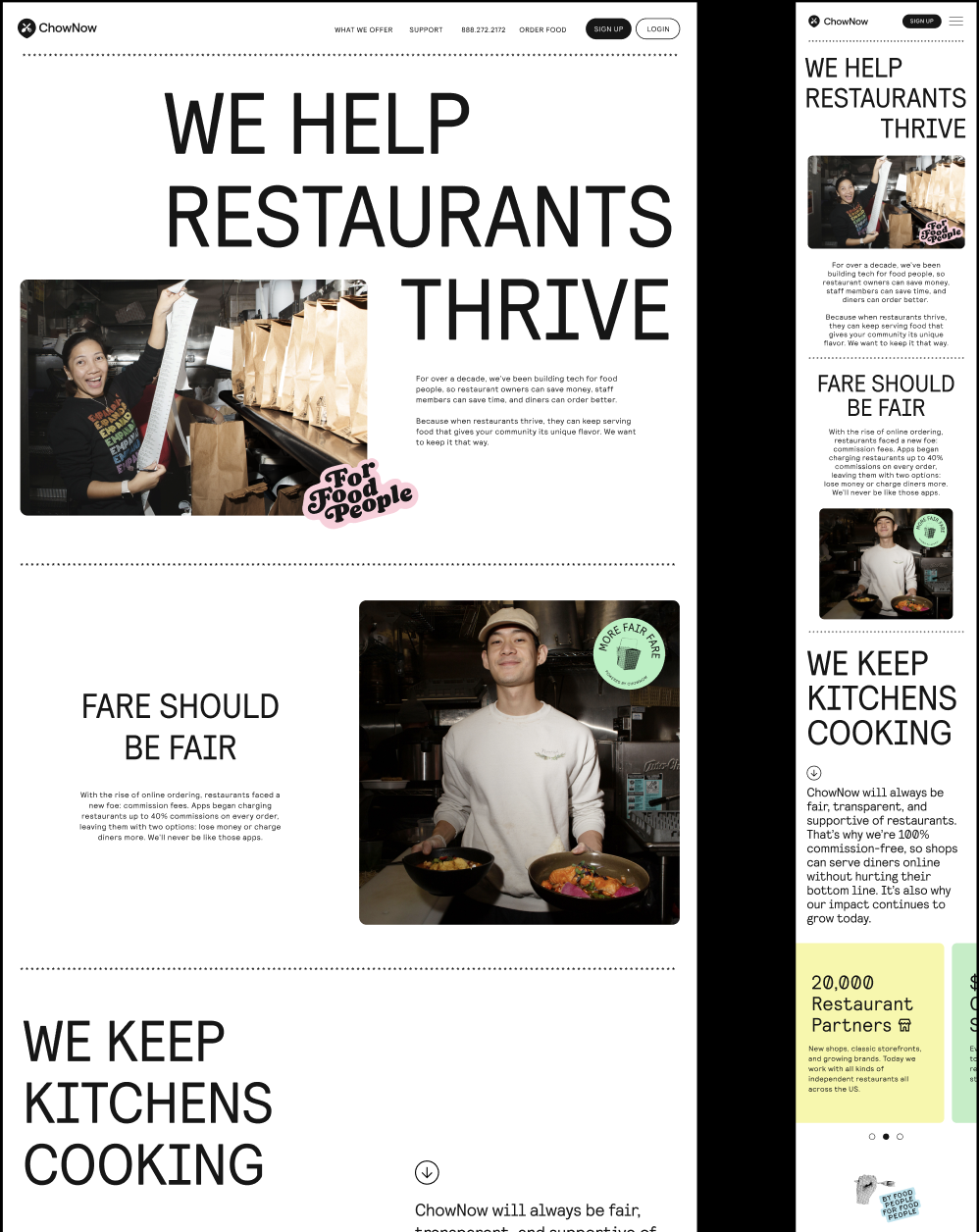
We separated restaurant and diner journeys, then rewrote page hierarchy, navigation, value propositions, proof points, and CTAs around each audience’s intent. The redesigned experience increased page views, CTA click-throughs, and new-user sign-ups.
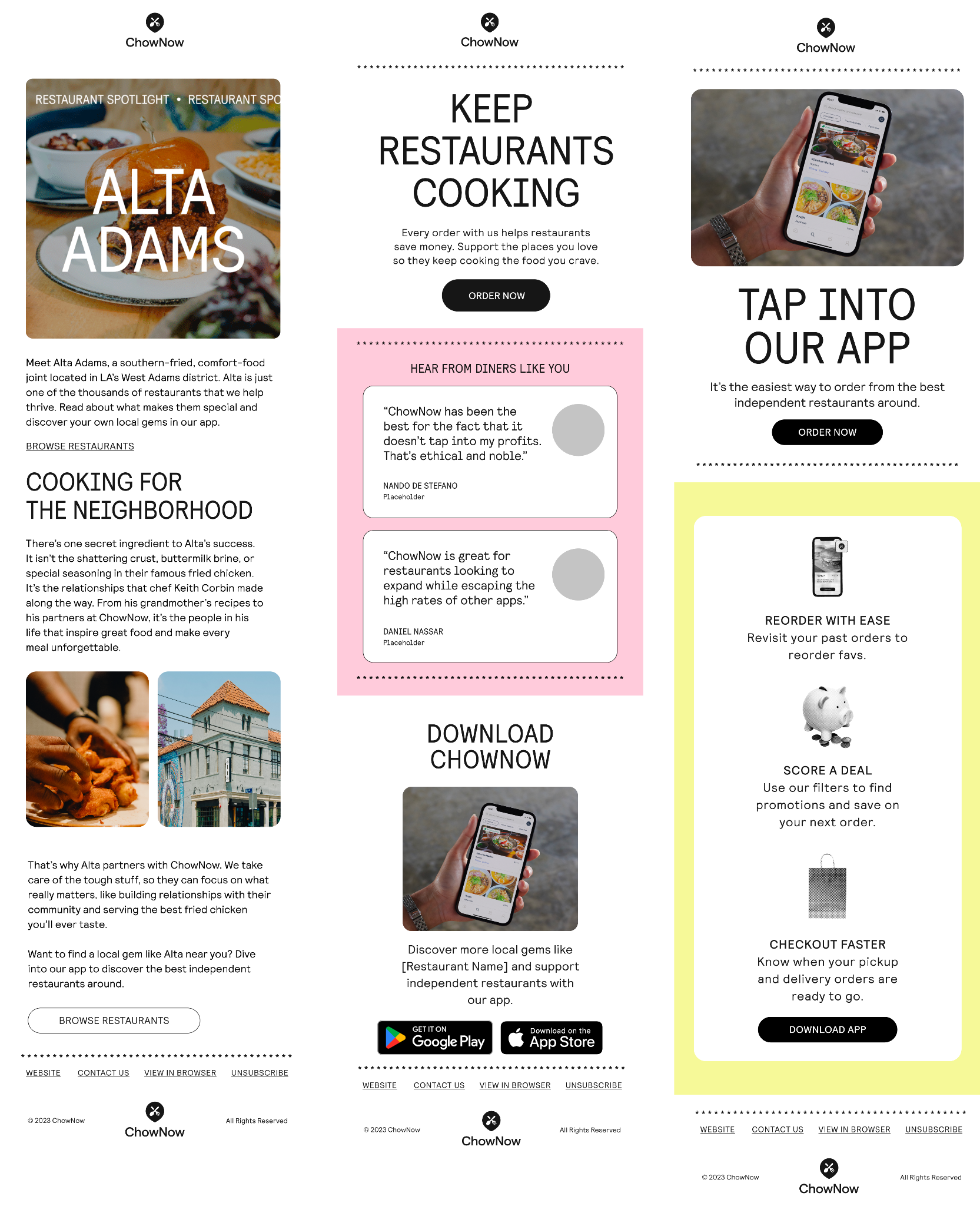
LIFECYCLE MARKETING
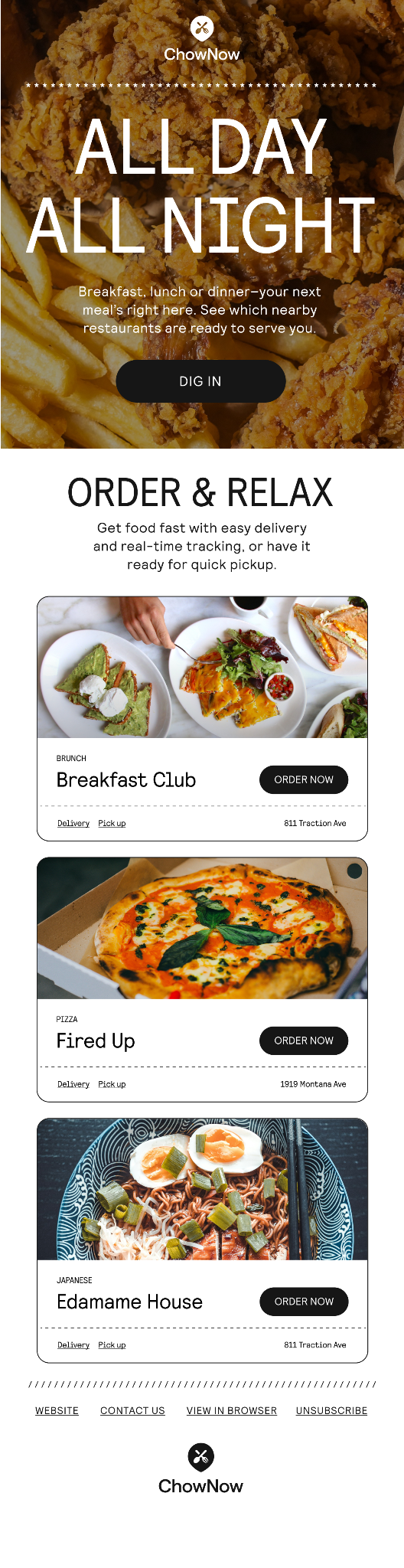
We rebuilt automated email around audience behavior, message sequencing, and modular templates. Testing subject lines, hooks, value propositions, content order, and CTAs helped increase email-driven purchases.
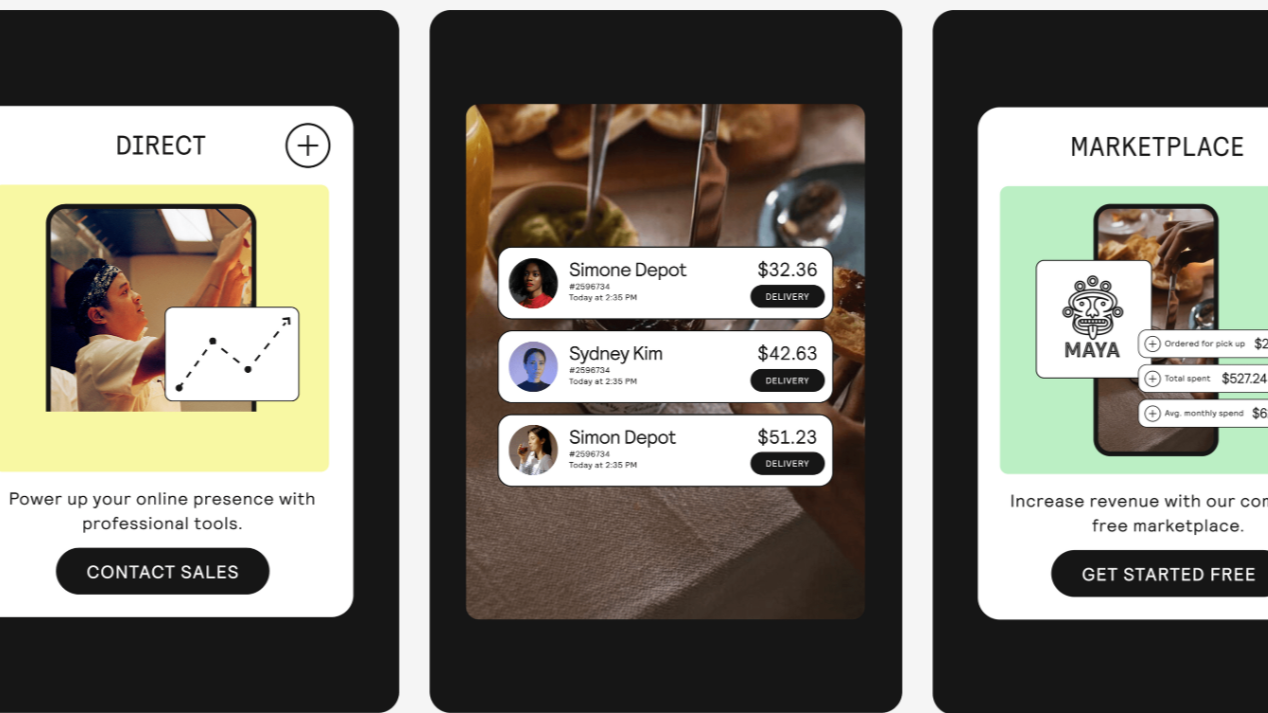
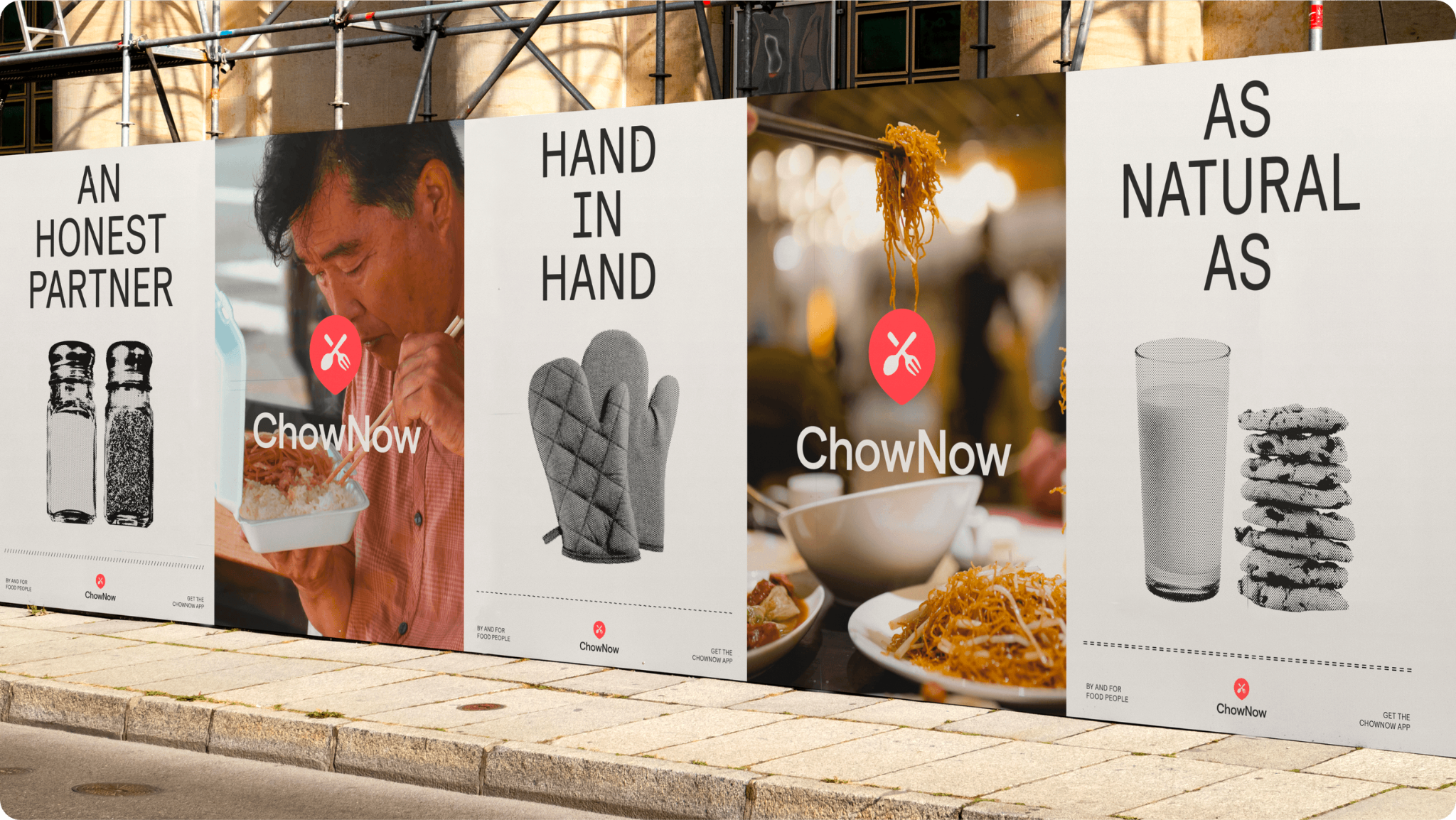
DISPLAY UNITS
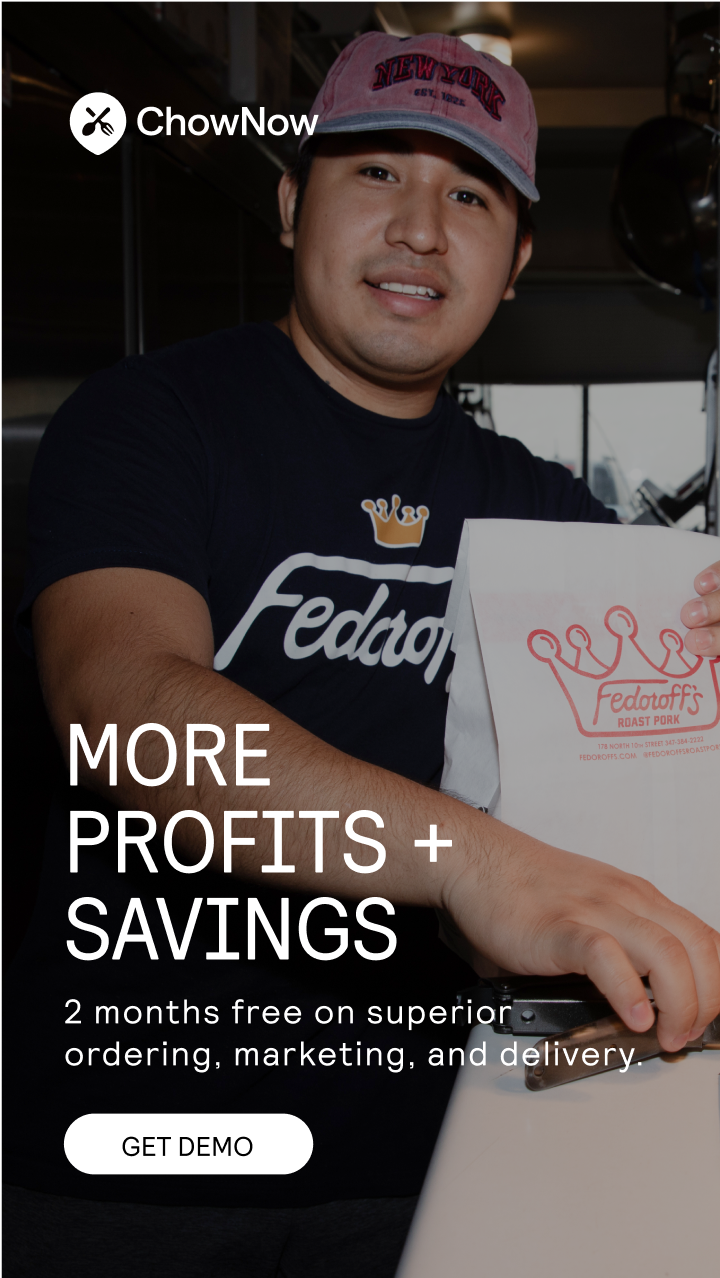
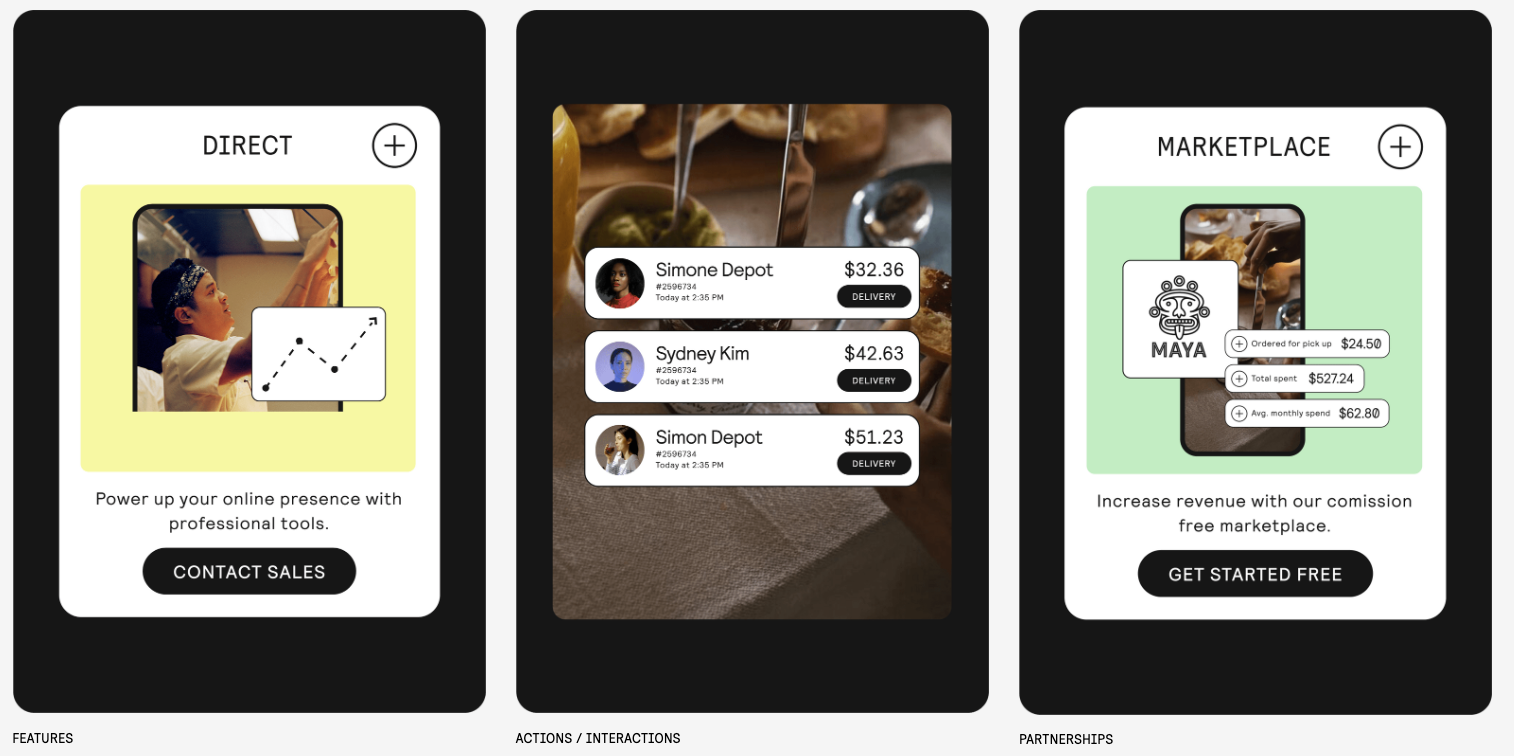
We built modular display concepts around a fast hook, focused value proposition, proof point, and CTA. Changing individual elements helped us compare viewability, CTR, and CVR across variations.

PAID SOCIAL
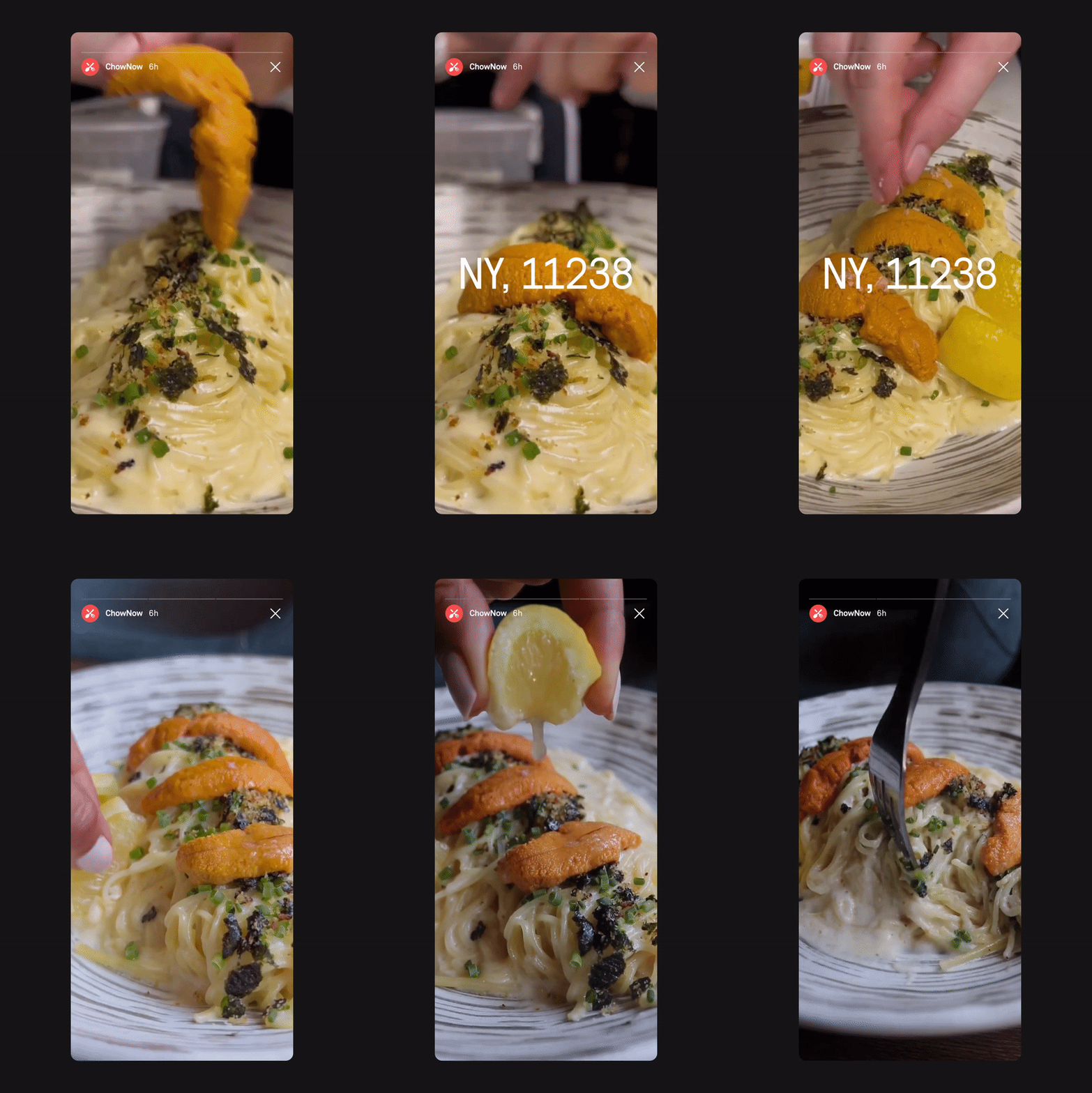
We translated the new voice into channel-native hooks, message frames, formats, and CTAs built for fast attention and response. Testing different combinations helped increase social engagement while creating stronger patterns for future creative.
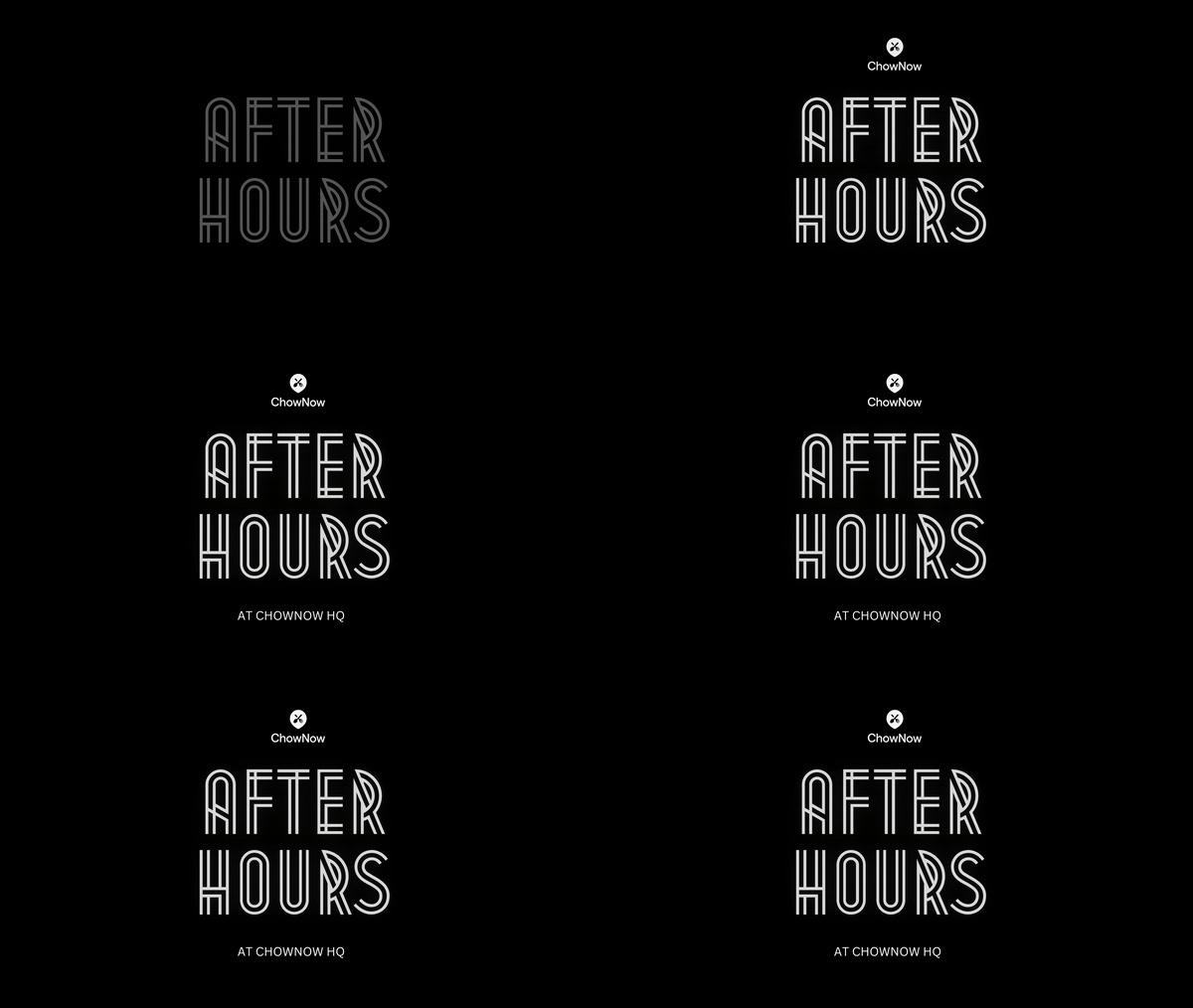
VIDEO & MOTION
We paired tighter scripts and onscreen copy with modular visual systems designed to make the opening and closing seconds work harder. Variations tested hooks, pacing, length, proof points, and CTAs against VTR, completion, and response.
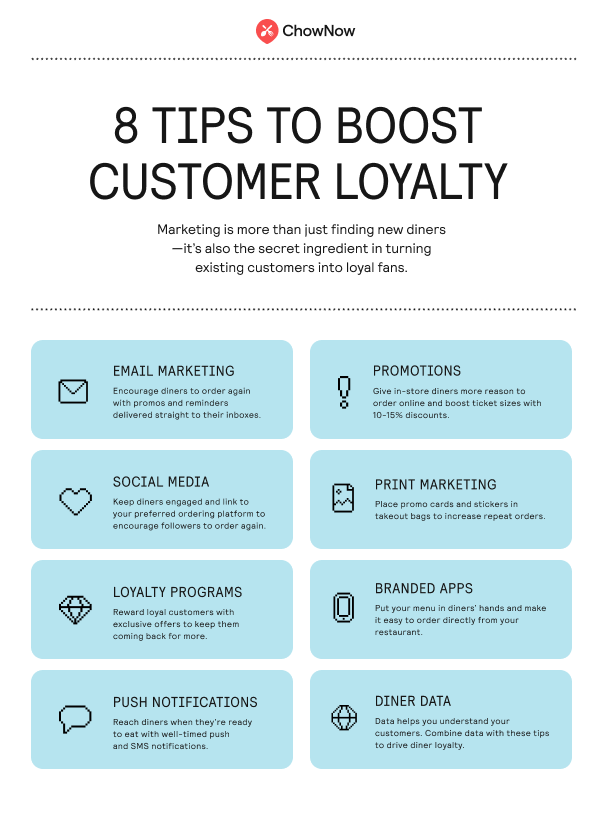
DIRECT RESPONSE MARKETING
We reduced each acquisition message to one audience, one reason to act, and one clear CTA. Variations tested offers, urgency, proof, and conversion language against CTR, CVR, CPA, and CAC.
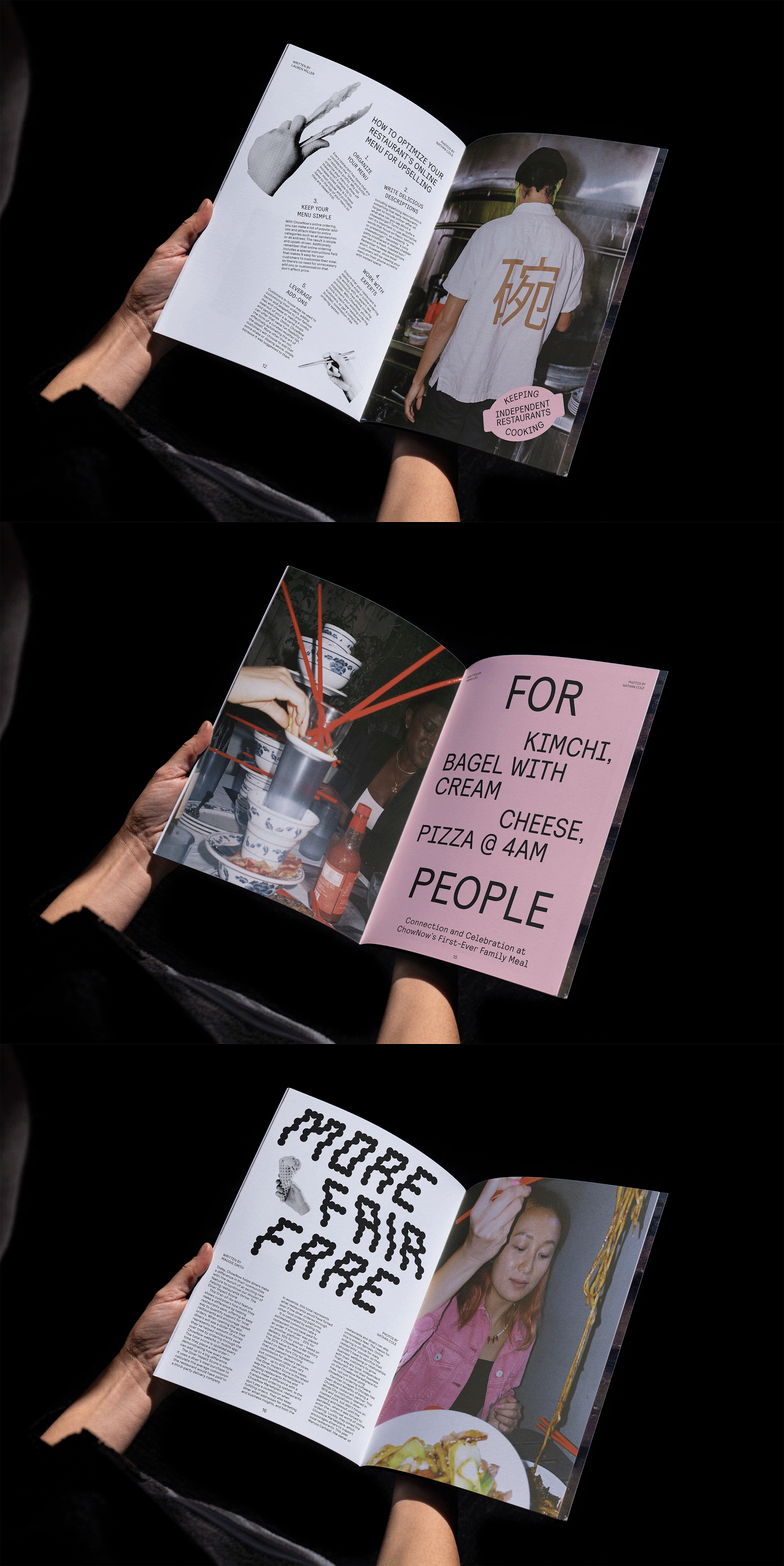
PRINT COLLATERAL
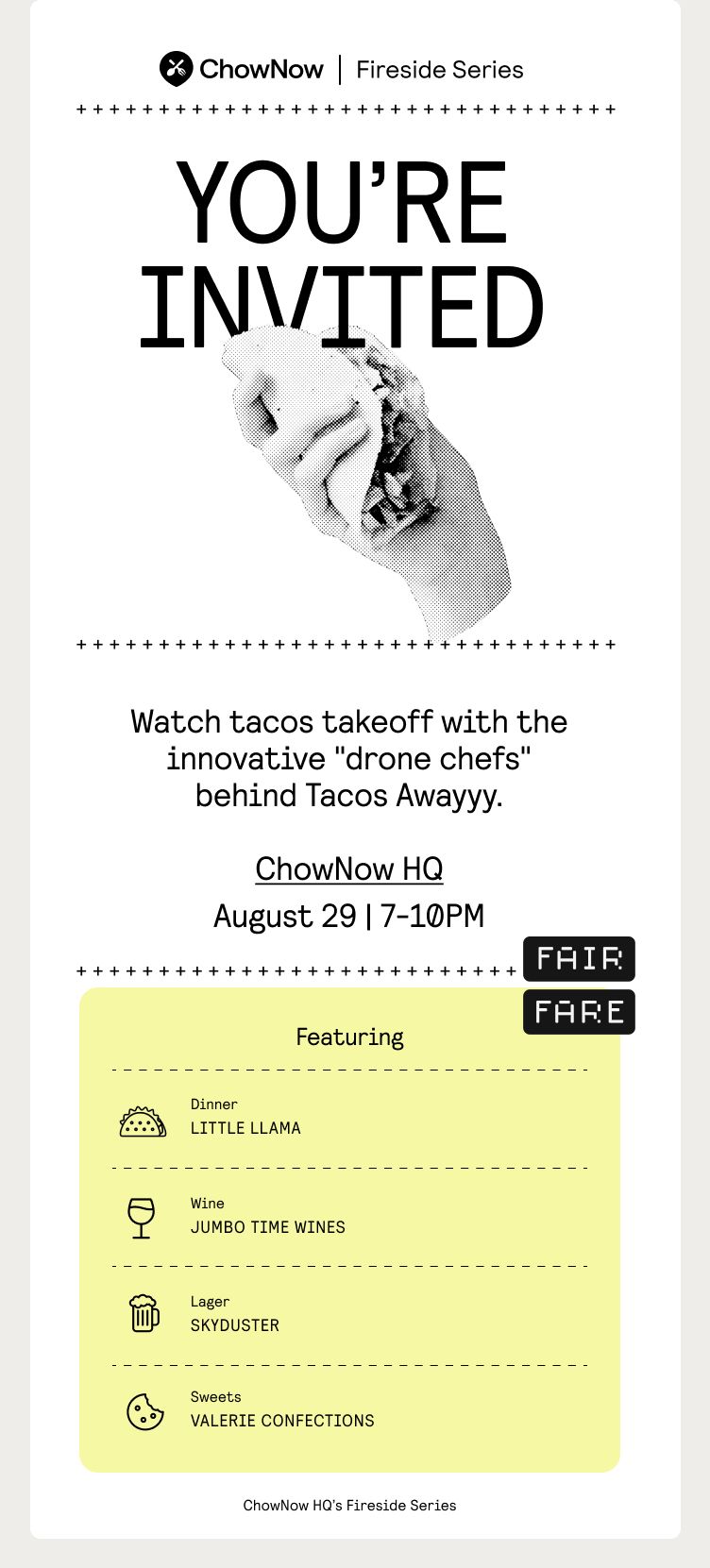
We adapted the verbal system for sales, events, and physical touchpoints using sharper hierarchy, audience-specific benefits, concise proof points, and clear next steps. The work gave customer-facing teams more consistent tools for lead generation, engagement, and follow-up.
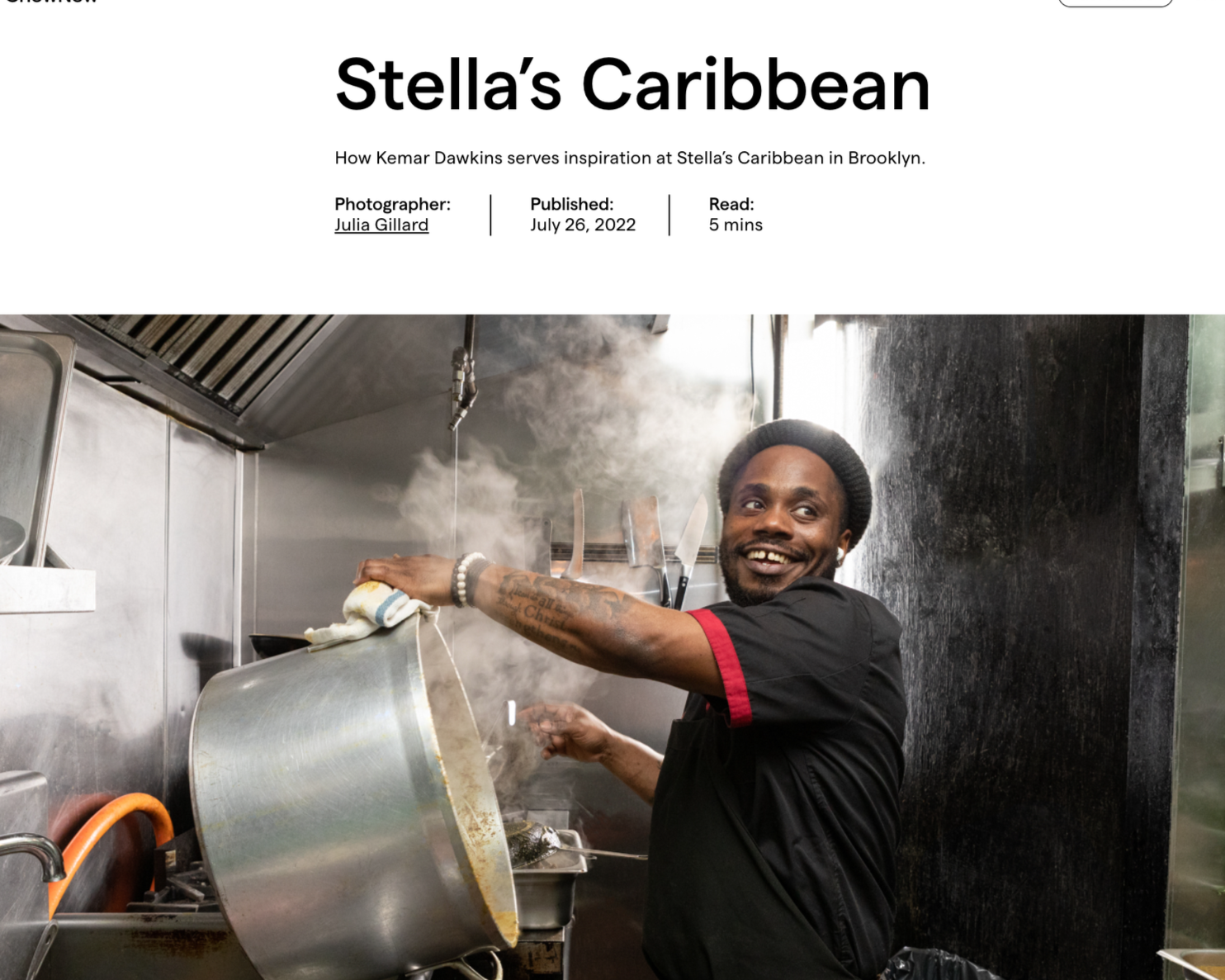
EDITORIAL
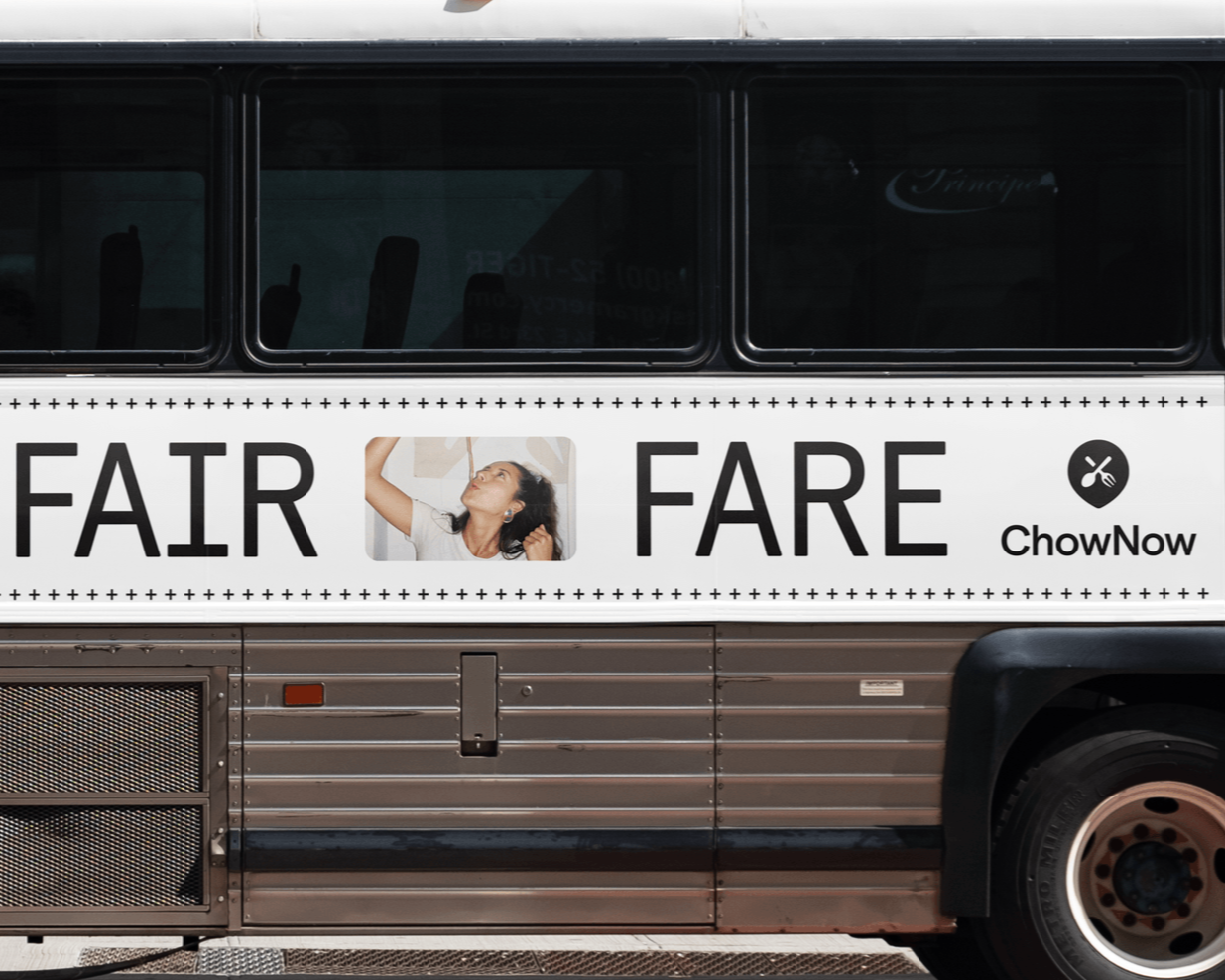
We built ChowNow Stories into a repeatable engine for restaurant-first storytelling across web, social, product, and partner channels. The strongest formats increased visits, sharing, cross-promotion, and time in the app while making the brand feel more human and authentic.
THE IMPACT
-
![]()
HIGHER ENGAGEMENT
Sharper hooks, channel-native formats, and focused messages increased social engagement 127% and established reusable patterns for future creative.
-
![]()
HIGHER CREATIVE BENCHMARKS
Winning tests established new baselines for messaging, hierarchy, format, and channel performance, giving every execution a clearer bar.
-
![]()
CLEANER PERFORMANCE READOUTS
Shared hypotheses, controlled variables, and primary KPIs made it easier to see what moved, why, and what to test next.
-
![]()
REPEATABLE CREATIVE SYSTEMS
Modular prototypes helped teams scale strong ideas across audiences, channels, and formats without rebuilding every execution from scratch.
-
![]()
GREATER CUSTOMER VALUE
More relevant lifecycle messaging increased purchases 35% and generated 1.03 million food orders across 58 million sends.
-
![]()
CLEARER USER JOURNEYS
Clearer restaurant and diner messaging improved navigation and action, lifting page views 45%, CTA click-through 50%, and sign-ups 20%.
-
![]()
SCALEABLE CONTENT FRANCHISES
ChowNow Stories and other repeatable formats turned individual concepts into scalable content engines without losing their strategic core.
-
![]()
STRONGER HOOKS
Audience-specific hooks earned attention faster across paid, lifecycle, social, video, and editorial, giving future briefs stronger creative starting points.
THANK YOU!
Thanks for spending time with the work. I’m always happy to talk voice, strategy, creative systems, and what comes next.